Job Search Visa: Complete Guide for Applicants from Pakistan
Finding a job abroad can open the door to better career opportunities, international experience, and long-term professional growth. But there’s one question many people ask before they start: Can I travel to another country specifically to look for a job?
In some countries, the answer is yes. A job search visa is designed to let eligible foreign nationals enter a country for a limited period to search for employment. Instead of securing a job offer before travelling, you may be allowed to enter first, attend interviews, meet employers, and explore suitable employment opportunities.
That sounds simple, but the rules can be very different from one destination to another. Some countries offer a dedicated job-seeking route, while others use a points-based system, skilled-worker pathway, temporary residence permit, or another form of employment-related entry permission.
This guide explains how the process generally works, who may qualify, what documents you may need, how to prepare your application, and what you should do after finding a job.
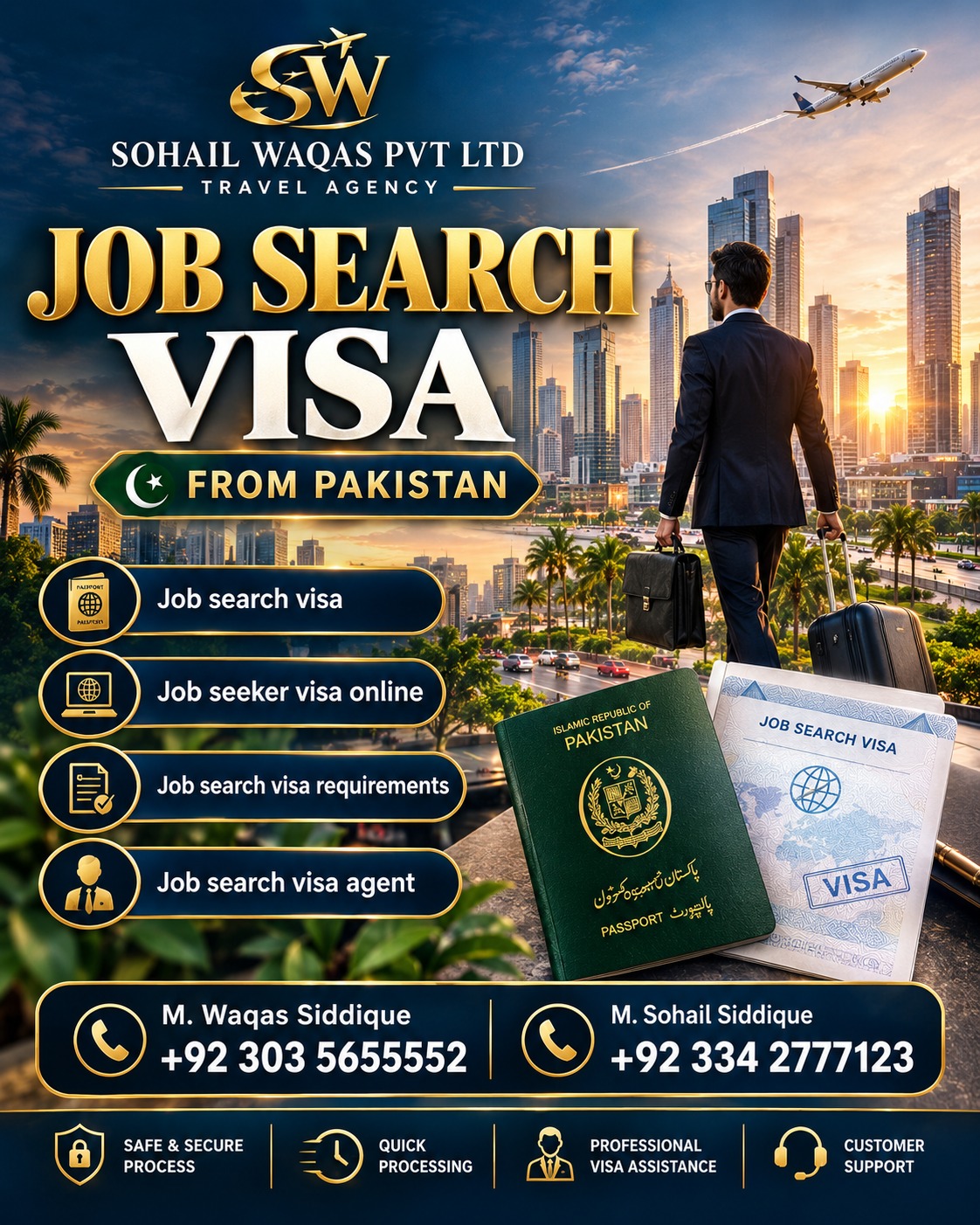
What Is a Job Search Visa?
A job search visa is a type of immigration permission that allows a qualified person to enter a foreign country for the purpose of searching for employment.
The key difference is that you generally don’t need to have a confirmed employment contract at the time of application, depending on the destination’s rules. You may use the permitted period to contact employers, attend interviews, submit applications, and look for a position that matches your qualifications.

Once you find suitable employment, you may need to change your immigration status or apply for an appropriate work authorization before starting the job.
Think of it as a bridge between job hunting and employment. It gives an eligible applicant an opportunity to look for work inside the destination country instead of trying to complete the entire recruitment process from abroad.
However, a job search visa isn’t automatically a work visa. Being allowed to search for employment doesn’t necessarily mean you’re allowed to start working immediately.
Always check the exact conditions attached to the visa issued by the relevant immigration authority.
How Does a Job Seeker Visa Work?
The basic idea is straightforward.
You apply for the appropriate visa or residence permission before travelling. If approved, you enter the destination country and use the permitted period to search for a suitable job.
Your activities may include:
-
Searching for vacancies
-
Applying to employers
-
Attending job interviews
-
Meeting recruitment agencies
-
Attending career events
-
Networking with professionals
-
Discussing employment opportunities
-
Completing employer assessments
-
Exploring positions related to your qualifications
If an employer offers you a position, you may then need to complete another immigration process.
For example, imagine a qualified professional from Pakistan who has experience in information technology. Instead of waiting for an overseas employer to select them remotely, they may use an eligible job-seeking route to enter a destination where such a route is available.
After arriving, they can attend interviews and meet companies directly. If they receive an acceptable offer, the next step may involve applying for a work permit or another employment-based status.
The exact process depends on the country.
Who Can Apply for a Job Search Visa?
Eligibility is one of the most important parts of the process.
A destination may consider several factors before approving an applicant. These can include education, professional experience, age, language ability, financial resources, qualifications, and the demand for particular skills.
Typical eligibility factors may include:
-
A recognized educational qualification
-
Relevant professional experience
-
A suitable occupational background
-
Proof of financial support
-
Valid travel documentation
-
Health or medical requirements, where applicable
-
Character or police clearance requirements, where applicable
-
Valid health insurance, where required
-
Language proficiency, depending on the program
-
Meeting a specific points or skills threshold
Not every applicant needs to meet every one of these conditions. Requirements are determined by the destination’s immigration system.
Here’s what most people miss: having a university degree alone doesn’t guarantee eligibility.
Immigration authorities may look at the combination of your education, experience, occupation, language skills, and other factors. A strong application is usually one where the documents clearly support the information entered in the application.
Job Search Visa vs Work Visa
These two terms are often confused.
A job search visa generally focuses on finding employment. A work visa or employment permit normally focuses on performing paid work legally.
| Feature | Job Search / Job Seeker Route | Work / Employment Visa |
|---|---|---|
| Main purpose | Looking for employment | Working for an employer |
| Job offer required | May not be required initially | Usually required, depending on route |
| Interviews | Generally part of the purpose | Not the main purpose |
| Employment allowed | Often restricted or subject to conditions | Usually permitted under the approved conditions |
| Next step | Obtain suitable employment and required authorization | Start or continue approved employment |
| Eligibility | Based on the destination’s job-seeking rules | Often linked to employer, occupation, and qualifications |
The distinction matters because starting employment without the required authorization can create serious immigration problems.
Before accepting a job, confirm exactly what your immigration status permits.
Benefits of a Job Search Visa
For eligible applicants, a job-seeking route can offer several advantages.
1. Search for Jobs Locally
Being physically present can make communication with employers easier.
You may be able to attend interviews in person, visit recruitment offices, participate in career events, and build professional connections.
2. Access More Opportunities
Some employers prefer candidates who are already available locally.
Being in the destination country can sometimes make scheduling interviews and completing recruitment steps more convenient.
3. Build a Professional Network
Job hunting isn’t always about submitting applications.
A conversation at a professional event can lead to an introduction. An introduction can lead to an interview. An interview can eventually lead to an employment offer.
Local networking can therefore be valuable.
4. Understand the Local Job Market
Researching a market from home is useful, but living there gives you a different perspective.
You can learn how employers advertise vacancies, what qualifications they expect, how interviews are conducted, and which industries are actively hiring.
5. Explore Career Options
A job-seeking route may allow you to discover opportunities you hadn’t considered before.
You might arrive expecting to work in one specific role and discover that your experience fits another position even better.
Documents Commonly Required
Document requirements vary, but applicants are often asked for a combination of personal, educational, financial, and professional evidence.
Common documents may include:
-
Valid passport
-
Completed visa application form
-
Recent photographs
-
Educational certificates
-
Academic transcripts, where required
-
Professional certificates
-
Employment or experience letters
-
Updated CV or résumé
-
Proof of accommodation
-
Proof of sufficient funds
-
Health insurance, where required
-
Police clearance certificate, where applicable
-
Medical documentation, where applicable
-
Proof of language proficiency, if required
-
Application appointment or biometric information
Some documents may need translation, certification, legalization, or verification.
Don’t assume that a document is acceptable simply because you have it. The immigration authority may specify a particular format or validity period.
How to Prepare Your CV for International Job Hunting
Your CV can make a major difference once you begin searching for work.
A common mistake is sending the same CV to every employer.
Instead, adjust your CV for the position you’re applying for.
For example, if you’re applying for an IT position, highlight:
-
Technical skills
-
Relevant projects
-
Certifications
-
Software knowledge
-
Professional achievements
-
Work experience
If you’re applying for a management role, emphasize:
-
Leadership
-
Team management
-
Business results
-
Project delivery
-
Strategic responsibilities
Keep the document professional and easy to scan.
Recruiters may receive hundreds of applications. A clear CV helps them understand your value quickly.
Step-by-Step Job Search Visa Process
The process can differ by destination, but the following framework is useful.
Step 1: Check Your Eligibility
Start by checking whether your destination actually offers a route for job seekers.
Review the official eligibility criteria carefully.
Pay attention to education, work experience, occupation, age, language requirements, financial requirements, and other conditions.
Step 2: Prepare Your Documents
Create a checklist before submitting anything.
Gather your passport, education records, employment evidence, financial documents, photographs, CV, and any other required paperwork.
Check names, dates, spellings, and document numbers carefully.
A small inconsistency can cause unnecessary delays or questions.
Step 3: Prepare Your Professional Profile
Update your CV and create a professional job-search strategy.
Research companies and industries before travelling.
Make a list of employers you want to approach and understand what skills they are looking for.
Step 4: Submit the Application
Complete the relevant application form accurately.
Don’t guess answers.
If the application asks about your education, employment history, travel history, or qualifications, make sure your answers match your supporting documents.
Step 5: Complete Biometrics or Other Formalities
Depending on the destination, you may need to provide fingerprints, photographs, medical information, or additional documentation.
Follow the instructions provided with your application.
Step 6: Wait for the Decision
Processing times can vary.
Avoid making irreversible travel arrangements until you understand the status and conditions of your application.
Step 7: Travel and Begin Your Job Search
If approved, review the visa conditions before travelling.
Once you arrive, begin your job search with a structured plan.
Don’t simply apply randomly to hundreds of jobs.
Focus on positions that match your education, experience, skills, and legal employment pathway.
Step 8: Secure Appropriate Employment Authorization
Finding an employer doesn’t always mean you can immediately start working.
You may need to change status, obtain a work permit, receive employer sponsorship, or complete another immigration procedure.
Follow the applicable rules before beginning employment.
How to Improve Your Chances of Finding a Job
Getting the visa is only one part of the journey.
Your employment strategy matters just as much.
Research Before You Travel
Spend time understanding the job market.
Look at:
-
In-demand occupations
-
Employer expectations
-
Required certifications
-
Language requirements
-
Common interview styles
-
CV formats
-
Professional networking opportunities
This preparation can save you weeks of unfocused job hunting.
Apply for Relevant Positions
Don’t apply for every vacancy you see.
If your background is in accounting, focus on accounting, finance, audit, taxation, and related roles that match your qualifications.
Quality applications are usually more useful than sending the same generic CV everywhere.
Build a Strong LinkedIn Profile
A professional online profile can help recruiters understand your experience.
Keep your employment history accurate and make sure your headline clearly communicates your profession and key skills.
Prepare for Interviews
Practice answering common questions before you travel.
Be ready to explain:
-
Your professional background
-
Why you’re interested in the position
-
What skills you bring
-
Your previous achievements
-
When you can legally start work
-
What type of role you’re seeking
Confidence helps, but honesty matters more.
Common Mistakes Applicants Should Avoid
Several mistakes can weaken an otherwise good application.
Mistake 1: Using Incorrect Information
Never provide false information on an immigration application.
Even a small false statement can create serious complications.
Mistake 2: Submitting Incomplete Documents
Check every requirement before submission.
If a document is required and missing, your application may be delayed or questioned.
Mistake 3: Ignoring Visa Conditions
Some applicants assume that entering a country means they can work immediately.
That’s not necessarily true.
Read the conditions attached to your immigration status.
Mistake 4: Travelling Without a Job Search Plan
A visa alone won’t find you employment.
Prepare your CV, employer list, interview strategy, accommodation plan, and professional network before departure.
Mistake 5: Relying on Verbal Promises
Be careful with anyone promising guaranteed employment or guaranteed visa approval.
Immigration decisions are made under the applicable laws and requirements of the destination.
Mistake 6: Sending the Same CV Everywhere
A generic CV can make your application look careless.
Tailor your CV and cover letter to relevant positions.
How Long Should You Plan Your Job Search?
The answer depends on the validity period and conditions of the particular visa.
Before travelling, calculate how much time you’ll realistically need.
Create a weekly plan.
For example:
Monday: Research vacancies and submit applications.
Tuesday: Contact recruiters and update your professional network.
Wednesday: Attend interviews or career events.
Thursday: Apply to targeted positions.
Friday: Follow up with employers and prepare for interviews.
Weekend: Improve your CV, skills, and interview preparation.
This simple structure can prevent your search from becoming unorganized.
What If You Don’t Find a Job?
Not every applicant finds employment during the permitted period.
If your visa expires without an employment offer, you must follow the applicable immigration rules.
Depending on the destination, you may need to leave the country, qualify for another immigration pathway, or take another permitted step.
Never simply remain after your authorized stay ends.
Overstaying can create immigration problems and may affect future travel or visa applications.
Job Search Visa Application Tips for Applicants from Pakistan
Applicants from Pakistan should pay close attention to document preparation.
Make sure your passport has sufficient validity and that your educational and professional records are organized.
If documents are not in the required language, arrange the appropriate translation or certification where necessary.
It’s also useful to maintain a complete digital backup of important documents.
Create a secure folder containing:
-
Passport copy
-
Educational documents
-
Experience letters
-
Professional certificates
-
CV
-
Photographs
-
Financial evidence
-
Insurance documents
-
Application records
Keep the information consistent across your CV, forms, and supporting documents.
When Is a Job Search Visa a Good Option?
This route may be worth considering if you have:
-
Strong professional qualifications
-
Relevant work experience
-
Skills in demand
-
A realistic employment plan
-
Sufficient funds for your stay
-
A clear understanding of the destination’s immigration rules
-
The ability to attend interviews and pursue employment actively
It may be less suitable if you’re travelling without a clear career direction or if your qualifications don’t meet the destination’s eligibility requirements.
The goal shouldn’t simply be to enter another country.
The goal should be to enter through a legal and suitable immigration pathway and build a realistic plan for employment.
Job Seeker Visa: What Most People Miss
Here’s something worth remembering: job hunting abroad is a process, not a single event.
You may need several interviews before receiving an offer. An employer may ask for additional qualifications. A position that looks perfect online may not match your expectations once you learn more about it.
Stay flexible.
At the same time, don’t accept an offer simply because you’re eager to start working. Verify the employer, understand the employment contract, confirm your legal work authorization, and make sure the position is genuine.
Your immigration status and employment rights should always come first.
Practical Checklist Before You Apply
Use this checklist before starting your application:
-
Confirm that an eligible job-seeking route exists
-
Check the current eligibility requirements
-
Check passport validity
-
Review education requirements
-
Review work-experience requirements
-
Check language requirements
-
Prepare financial evidence
-
Prepare employment documents
-
Update your CV
-
Arrange translations or certifications if required
-
Check health insurance requirements
-
Review application instructions
-
Prepare for biometrics if required
-
Research the local job market
-
Prepare an employer target list
-
Understand the conditions of your visa
-
Understand what authorization is needed before starting work
Final Thoughts
A job search visa can be an attractive pathway for qualified professionals who want to explore international employment opportunities without having a job offer in hand at the beginning.
But successful job hunting starts long before you board a plane.
Your eligibility, documentation, CV, professional skills, interview preparation, financial planning, and understanding of immigration conditions all matter. The strongest applicants don’t treat the visa as the final goal. They treat it as one step in a larger career plan.
If you’re considering applying from Pakistan, begin by identifying the destination and checking its current immigration rules. Requirements can change, and the correct visa category depends on your individual circumstances.
Prepare your documents carefully, keep your information accurate, understand what you are legally allowed to do, and approach your job search with a clear strategy.
With proper preparation and professional guidance, your international career journey can start with a well-organized application and a realistic employment plan.
Ready to explore your job-seeking visa options? Get professional visa assistance, prepare your documents correctly, and take the next step toward your international career opportunity.
FAQ
1. What is a job search visa and who can apply?
A job search visa is an immigration route that may allow eligible foreign nationals to enter a country to look for employment. Eligibility depends on the destination and may include education, professional experience, language skills, financial resources, and other criteria.
2. Can I work immediately after getting a job seeker visa?
Not necessarily. A job-seeking visa generally allows you to search for employment, while working may require a separate work permit, employment authorization, status change, or another immigration procedure. Always check the conditions attached to your visa.
3. What documents are required for a job search visa from Pakistan?
Requirements vary by destination, but applicants may need a valid passport, photographs, educational certificates, experience letters, CV, financial evidence, insurance, police clearance, and other supporting documents.
4. Can I apply for a job search visa without a job offer?
For destinations that provide a genuine job-seeking route, a confirmed job offer may not be required at the initial application stage. However, you must meet the specific eligibility conditions of that immigration program.
5. How can I find a job after arriving on a job seeker visa?
Prepare before travelling. Update your CV, research employers, apply for suitable vacancies, contact recruiters, attend interviews, build a professional network, and participate in relevant career events. A focused job-search strategy is much more effective than applying randomly.
6. What happens if I don’t find a job before my visa expires?
You must follow the immigration rules applicable to your visa. Depending on the destination and your circumstances, you may need to leave the country or qualify for another permitted immigration route. Never overstay your authorized period.
https://sohailwaqas.com/job-search-visa-from-pakistan-complete-guide/
Contact Details
M. Waqas Siddique
+92 303 5655552
M. Sohail Siddique
+92 334 2777123
SOHAIL WAQAS PVT LTD — TRAVEL AGENCY
Related Reading: Air Ticket Booking Guide from Pakistan | Easy Travel Tips
Related Reading: Cheapest Flight Air: Complete Guide to Finding Flights
Related Reading: Qatar Visa from Pakistan: Complete Application Guide